
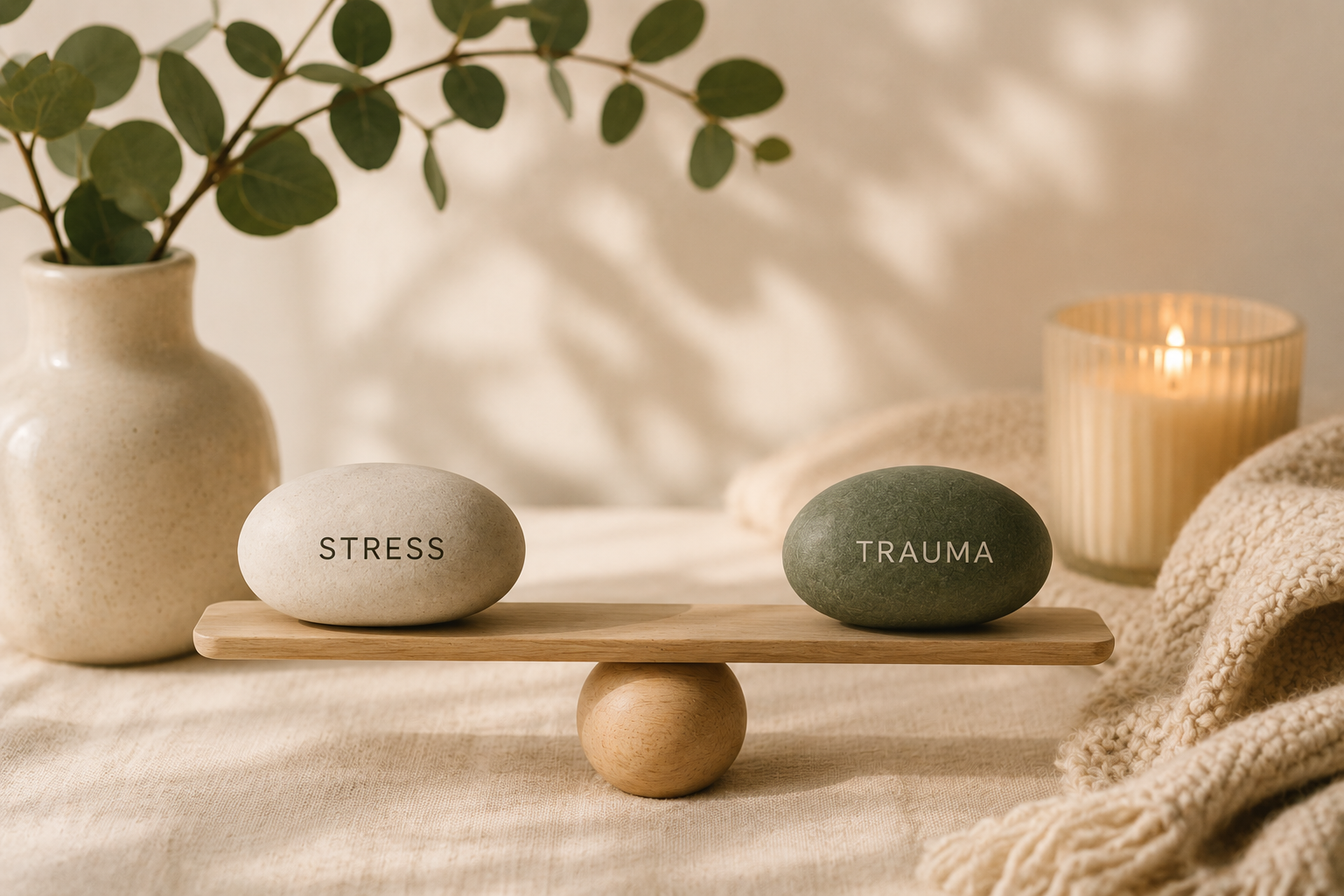
If you’ve spent any time on social media recently, you may have come across the idea that all stress, anxiety, overwhelm, or burnout must be linked to unresolved childhood trauma.
While trauma can absolutely have a profound impact on our physical and emotional health, it’s important to remember that not every symptom of stress is rooted in past trauma.
Sometimes life is simply demanding.
Understanding the difference between stress and trauma can help us better understand our bodies and choose the right support for our needs.
What Is Stress?
Stress is a normal human response to challenges, demands, or perceived threats.
Our bodies are designed to experience stress from time to time. In fact, stress can sometimes be helpful. It can motivate us to meet deadlines, care for our families, or respond quickly in emergencies.
The problem arises when stress becomes constant.
Common sources of everyday stress include:
- Work pressures
- Financial concerns
- Parenting responsibilities
- Relationship difficulties
- Caring for elderly relatives
- Lack of sleep
- Illness or chronic pain
- Major life changes
When stress continues for weeks, months, or years, the body’s nervous system may struggle to return to a calm, balanced state.
What Is Trauma?
Trauma is different from everyday stress.
Trauma occurs when an event or series of events overwhelms a person’s ability to cope.
Examples may include:
- Serious accidents
- Abuse or neglect
- Violence
- Medical emergencies
- Pregnancy or birth complications
- Loss of a loved one
- Natural disasters
Importantly, trauma is not defined solely by the event itself. Two people can experience the same situation and be affected very differently.
Trauma is about how the nervous system experiences and processes an event.
Why the Difference Matters
In recent years, awareness of trauma has increased significantly. This has helped many people understand experiences that may have affected their mental and physical wellbeing.
However, it has also led to a tendency to view every symptom through a trauma lens.
Feeling stressed does not automatically mean you have unresolved trauma.
Sometimes the explanation is much simpler.
Perhaps you are:
- Working full-time
- Raising young children
- Caring for ageing parents
- Sleeping poorly
- Managing financial pressures
- Recovering from illness
Under those circumstances, feeling exhausted, overwhelmed, anxious, or emotionally drained may be an understandable response to your current life situation.
Not every struggle requires uncovering a hidden wound from the past.
The Body Doesn’t Always Care Where the Stress Came From
Whether stress originates from a difficult childhood, a demanding job, a new baby, or a challenging period of life, the body often responds in similar ways.
You might experience:
- Poor sleep
- Muscle tension
- Digestive upset
- Headaches
- Fatigue
- Irritability
- Difficulty concentrating
Your nervous system is responding to a load that feels difficult to manage.
The goal is not always to identify a single root cause.
Sometimes the goal is simply to reduce the overall burden on the body and create opportunities for recovery.
Supporting a Stressed Nervous System
When people hear the phrase “nervous system regulation,” they often assume it means years of therapy or uncovering long-forgotten memories.
For some people, therapy can be incredibly valuable.
For others, support may involve practical lifestyle changes such as:
- Improving sleep habits
- Reducing commitments
- Setting healthier boundaries
- Gentle exercise
- Spending time outdoors
- Mindfulness practices
- Acupuncture
- Talking to supportive friends or professionals
The right approach depends on the individual.
Where Acupuncture Fits In
Acupuncture is not a treatment for trauma itself.
However, many people find it helpful for managing the physical and emotional effects of stress.
By creating time to slow down and supporting the body’s natural relaxation response, acupuncture may help people feel calmer, sleep more deeply, and cope better with life’s challenges.
Whether your stress stems from a difficult life event or simply a very full schedule, taking time to support your wellbeing is never wasted.
A More Compassionate Perspective
Not every headache, sleepless night, or period of overwhelm means something is broken.
Not every symptom needs to be traced back to childhood.
Sometimes your body is simply responding to the reality of carrying too much for too long.
And sometimes the most helpful question isn’t:
“What trauma caused this?”
It’s:
“What support do I need right now?”
Because regardless of where stress comes from, you deserve care, rest, and support.
Leave a Reply